Most backlinks don't fail because they're technically wrong. They fail because they're placed in the wrong context.
A link stuffed into a footer, dropped into a sidebar, or planted on a page with no topical connection to your content does almost nothing for rankings. Contextual backlinks, placed inside relevant body content, send clear signals to Google and bring in readers who actually care about the topic they're reading.
Here's what this article covers:
What contextual backlinks are and how the three types differ from one another
What separates a genuinely valuable contextual link from a mediocre one
How to build, evaluate, choose anchor text for, and measure them properly
P.S. This article follows the same placement standards used at Link Building Company, where contextual relevance is non-negotiable before any link goes live. If you want placements that actually move rankings, that's worth a look.
TL;DR
Contextual backlinks sit inside relevant body content, not footers, sidebars, or author bios.
They pass stronger relevance and authority signals than non-contextual placements.
Value comes from topical alignment, placement quality, editorial standards, and real audience fit, not Domain Rating alone.
Build them through guest posts, link insertions, linkable assets, digital PR, and expert contributions.
Track impact through ranking changes, referral traffic, and relevant referring domain growth, not link count
What Exactly Is a Contextual Backlink?
A contextual backlink is a link placed within the body of relevant content, surrounded by text that relates to the topic of the linked page. It's not a footer link, a logo badge, or a site-wide navigation element. It lives inside the article itself, in a way that feels natural and adds real value to the reader.
Google interprets the surrounding text, anchor language, and topic relevance as semantic signals. When a link sits inside a well-written, on-topic paragraph, it tells search engines exactly why that link exists and what the linked page covers.
There are three directions a contextual link can travel:
Contextual Inbound Links
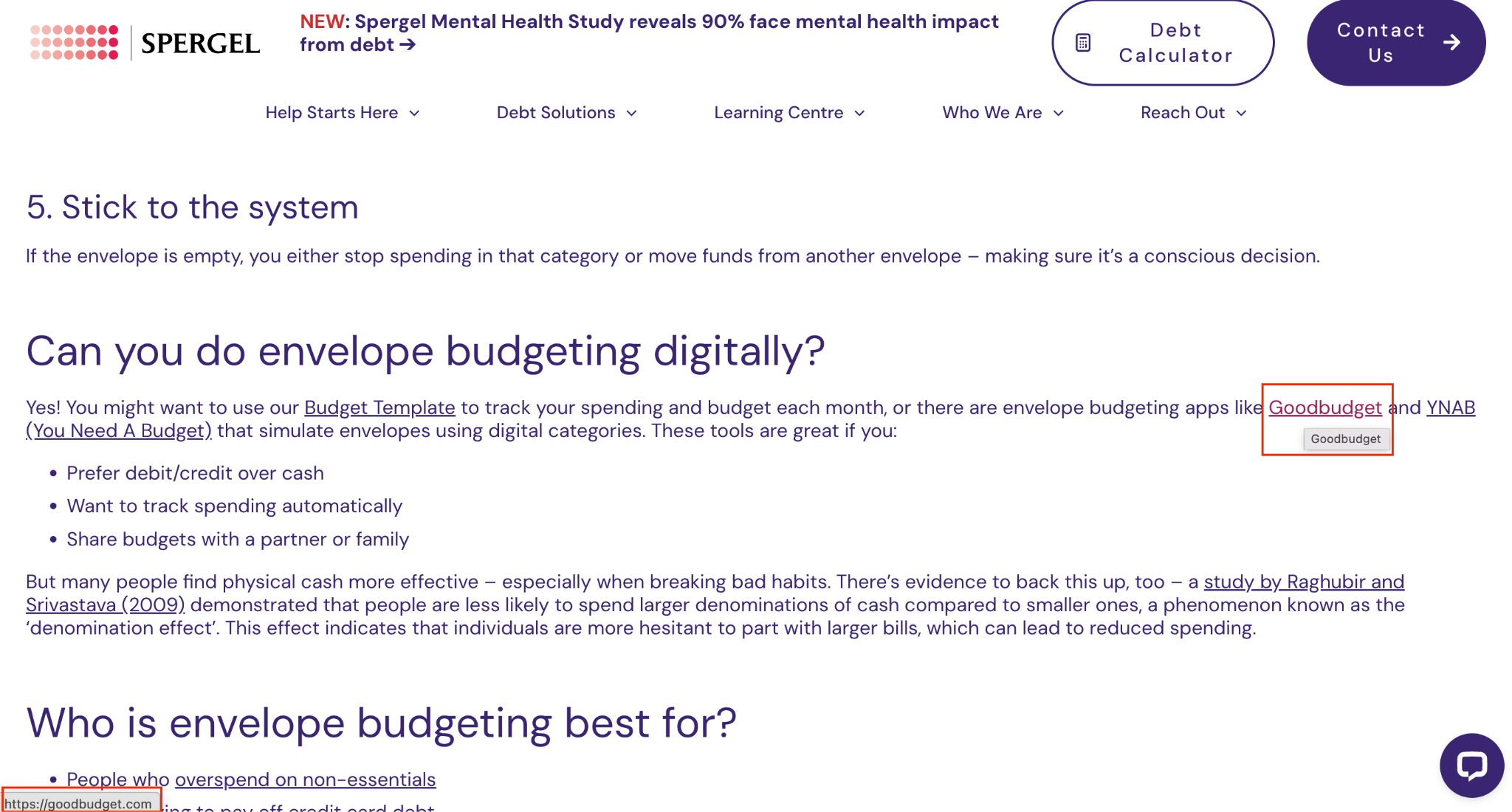
These are backlinks pointing to your website from another site's body content. When a finance publication mentions your budgeting tool inside an article about personal finance, that's a contextual inbound link. The relevance comes from both the surrounding text and the page topic, not just the domain.
Contextual Outbound Links
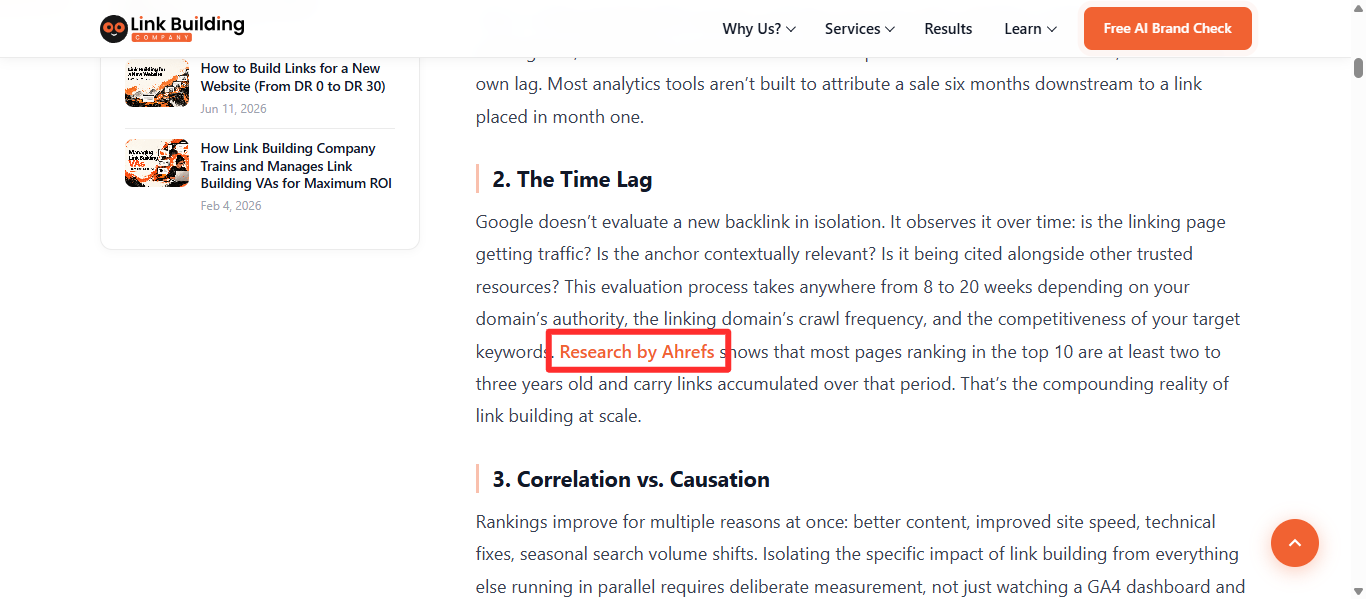
These are links your pages send outward to other websites. When your content cites a relevant study, references a tool, or links to a supporting resource, those are outbound contextual links. They signal editorial quality and help search engines build a topical map around your content.
Contextual Internal Links
Internal contextual links connect pages within your own site. Linking a pricing page from a relevant service comparison article passes authority to commercial pages while guiding readers naturally through your content. These deserve the same contextual care as external links.
Why Contextual Backlinks Matter for SEO
Not all backlinks carry equal weight. Google's approach to link evaluation has moved well beyond counting links. What surrounds a link, who placed it, and why it exists are all part of the evaluation. Contextual placement is what separates high-impact links from background noise.
Stronger Topical Relevance
When a link appears inside relevant content, it reinforces what your page covers. A backlink from a cybersecurity article pointing to your SaaS security product tells Google your page belongs in that topic cluster. That kind of signal is at the heart of semantic link building, which prioritizes contextual relationships over link volume alone.
Greater Authority and Trust
A link placed inside genuine editorial content carries implicit endorsement from the publisher. It signals that a real editor or writer considered the linked content useful enough to include. That trust signal contributes to E-E-A-T and strengthens how Google evaluates your site within competitive categories.
Better Ranking Potential
Research consistently shows that top-ranking pages carry more quality referring domains than lower-ranked competitors. Contextual links from topically aligned content compound that effect. A handful of well-placed editorial links from relevant sites regularly outperforms a much larger number of low-quality, non-contextual placements.
More Qualified Referral Traffic
Readers follow contextual links because the surrounding content gives them a reason to. Someone reading about email marketing automation who clicks a link to your automation tool is already interested in what you offer. That traffic converts at a far higher rate than referral traffic arriving from disconnected pages.
Improved Brand Visibility
Contextual links place your brand inside conversations that matter to your audience. Repeated appearances in relevant articles, comparisons, and industry guides build recognition over time and drive branded search growth alongside the direct SEO benefit.
How to Evaluate a Contextual Backlink Opportunity
Before pursuing or accepting a placement, run through these five checks. They separate genuine opportunities from wasted spend.
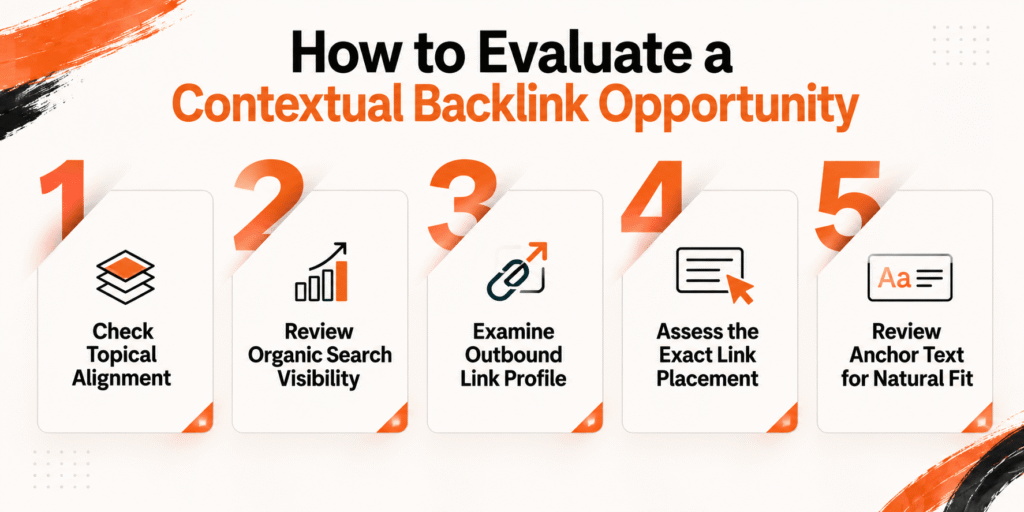
Check Topical Alignment
Does the site cover topics related to your industry? Does the specific page discuss something connected to your target URL? If both answers are yes, the topical foundation is solid. If only the domain is relevant but the page is off-topic, the placement is weaker than it appears on the surface.
Review Organic Search Visibility
Use Ahrefs or Semrush to check whether the site and linking page actually receive organic traffic. A site with a high Domain Rating but minimal organic traffic suggests the audience is not real. Traffic is the clearest proof that the content resonates with people beyond bots.
Examine the Site's Outbound Link Profile
Check how many outbound links the site includes on typical pages. A page with 40 outbound links spread across 500 words dilutes the value of every link it carries. Fewer, more selective placements signal genuine editorial standards. Sites that link to anyone who pays are not editorial in any meaningful sense.
Assess the Exact Link Placement
Look at where in the content your link would sit. A link in the first or second relevant paragraph of a 1,500-word article carries more weight than a link buried in a conclusion with no setup. Position and surrounding text both affect how search engines weight the placement.
Review Anchor Text for Natural Fit
Does the proposed anchor text fit naturally within the surrounding sentence? Does it describe the destination page accurately? Forced anchors that break sentence flow signal manipulation. Natural anchors that help readers navigate signal genuine editorial value.
How to Build Contextual Backlinks
Building contextual backlinks means earning placements on pages where your content genuinely belongs. These are the methods that consistently produce the strongest results.
Earn Editorial Mentions With Linkable Content
Create content that gives other publishers a reason to reference you: original research, industry data, detailed guides, and free tools all attract natural citations. The more unique and useful the content, the more organic opportunities appear without direct outreach.
Add Relevant Links Through Existing Content Placements
Contextual link insertions identify existing articles on relevant websites and add your link where it naturally improves the article. The key is adding real value: a missing statistic, an updated resource, or additional context that strengthens the existing content. When the addition genuinely helps, editors are far more likely to approve it.
Publish Guest Content on Relevant Websites
Guest posting on relevant publisher websites places original content and your contextual link directly inside editorial content. The strongest guest posts target BOFU topics including comparisons, alternatives, and category-specific guides where your brand mention makes natural contextual sense.
These placements also build visibility in AI search, since systems like ChatGPT and Perplexity pull recommendations from exactly these types of editorial articles.
Replace Broken Resources With Better Content
Find broken links on relevant pages that previously pointed to resources similar to yours. Create a better, updated version of that content, then pitch the replacement. Publishers appreciate the fix, and you earn a contextual placement that sits in an already-relevant editorial context.
Earn Citations Through Digital PR
Digital PR creates newsworthy content that journalists and editors reference independently. Original data, notable research, and expert commentary earn contextual links from news sites and industry publications that you cannot simply purchase through outreach.
Contribute Expert Insights and Original Research
Expert roundups, interviews, and data contributions place your name and URL inside relevant editorial content. These placements sit in naturally high-relevance positions because the surrounding content is specifically about the topic your expertise covers.
Build Relationships With Relevant Publishers
Ongoing relationships with editors and site owners unlock placements that cold outreach cannot reach. When you contribute quality content consistently, editors come to you with opportunities rather than the reverse. The compound effect of these relationships grows significantly over time.
Contextual Link Building Service
Building contextual backlinks consistently takes time, especially when outreach, publisher communication, content coordination, and tracking are handled in-house.
A contextual link building service can manage this process for businesses that lack the internal resources or publisher relationships to scale outreach efficiently.
The key is to work with a provider that keeps the process transparent and aligned with your SEO goals.
At Link Building Company, we manage contextual link outreach and placements with a focus on relevance and measurable organic growth.
Our Brand Mentions service adds a short linked mention in a new or existing article, rather than a full article about one brand.
How to Choose Anchor Text for Contextual Links
Anchor text strategy affects both ranking potential and profile risk. A healthy mix uses varied anchor types spread across pages and placements.
Branded Anchors
Branded anchors use your company or product name as the link text. They build recognition and are the safest to scale because they look natural to Google. A balanced backlink profile typically uses branded anchors for around 35 to 40% of all placements.
Partial-Match Anchors
Partial-match anchors include a core keyword alongside other descriptive words, such as "best link building services for agencies." They add keyword relevance without the manipulation risk that comes from pure exact-match usage at scale.
Descriptive and Natural Anchors
Descriptive anchors explain the destination in natural language: "a guide to contextual placement strategy" or "the full breakdown of link velocity." These serve the reader first and the algorithm second, which is exactly the right priority.
Exact-Match Anchors
Exact-match anchors use your precise target keyword with no variation. They carry ranking potential but also carry risk when overused. Keep exact-match anchors to around 10% of your profile and place them only where the surrounding text makes them read naturally, not forced.
How to Measure the Impact of Contextual Backlinks
Tracking the right signals tells you whether your placements are working and where to adjust next.
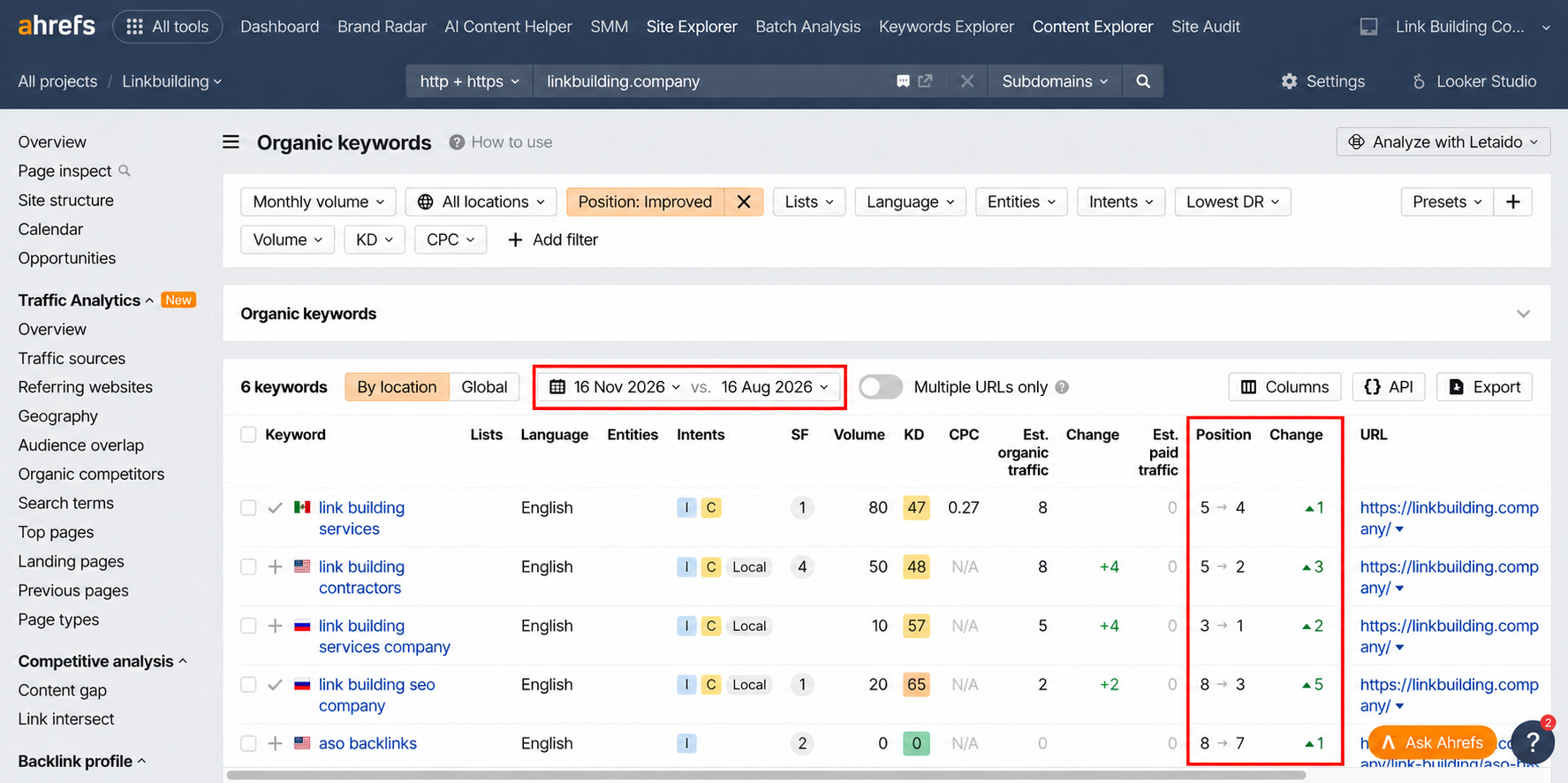
Keyword Ranking Changes
Monitor position changes for target keywords on the pages your contextual links point to. Ranking movement in the weeks following a batch of quality placements indicates the links are passing value. Use Ahrefs, Semrush, or Google Search Console to track position trends consistently.
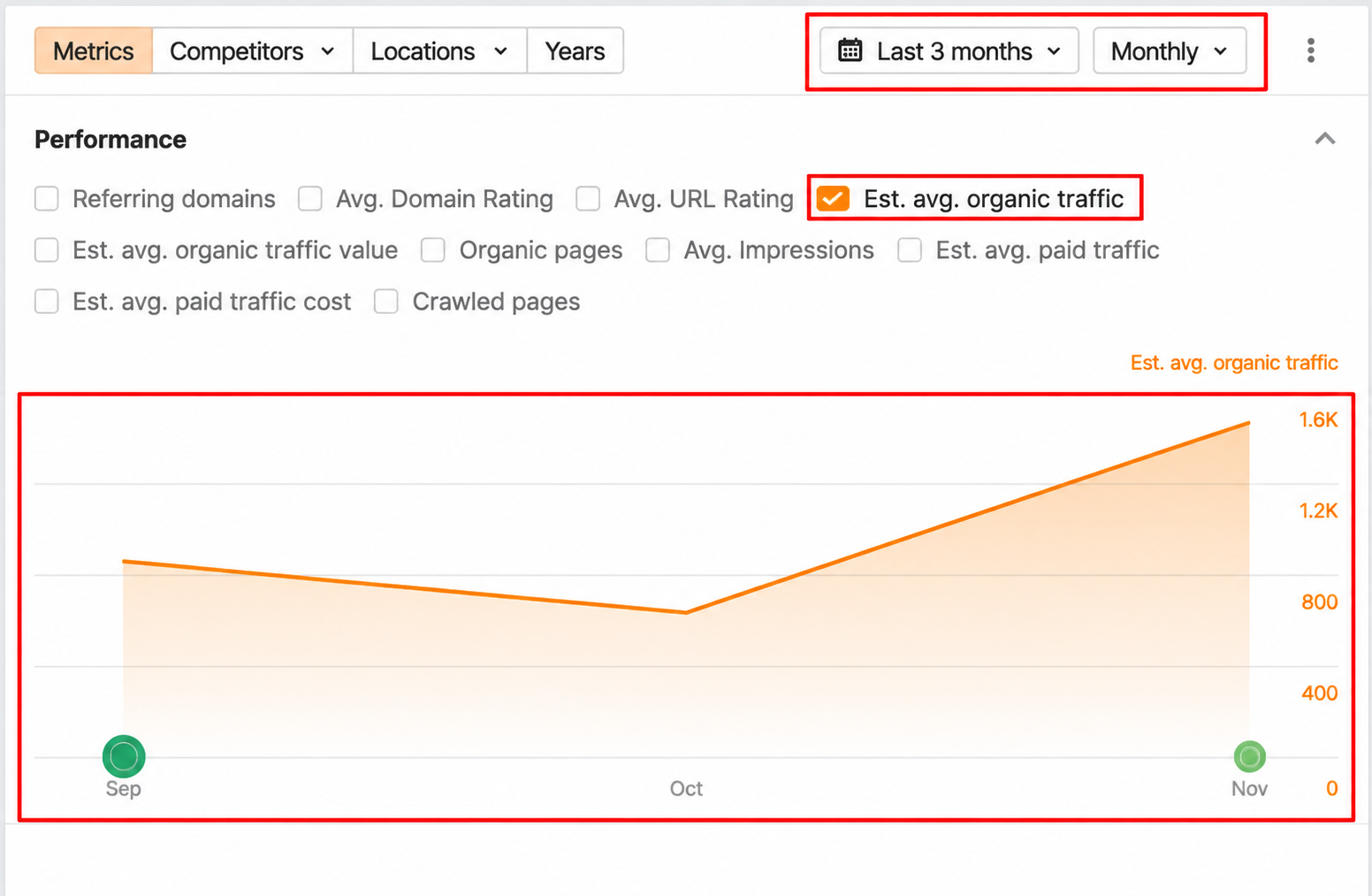
Target Page Organic Traffic
Organic traffic to linked pages is the clearest downstream signal of ranking improvement. Compare month-over-month traffic on target pages after contextual links go live. A consistent upward trend confirms link quality and placement relevance.
Growth in Relevant Referring Domains
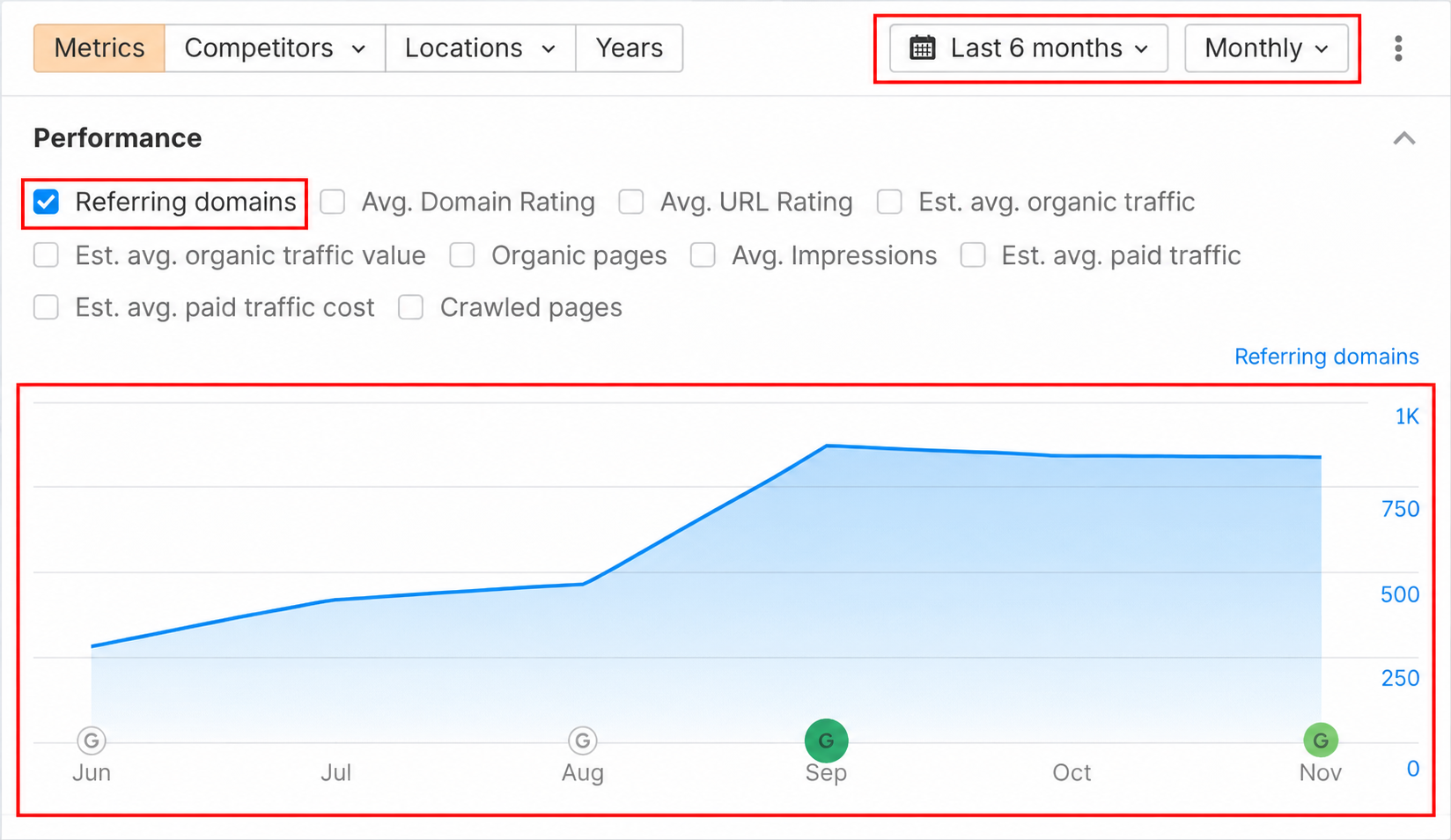
Track growth in referring domains alongside quality metrics. Increasing topically relevant referring domains signals a healthy, expanding backlink profile. Growing the count of referring domains from irrelevant or low-quality sites does not produce the same compounding effect.
Referral Traffic and Conversions
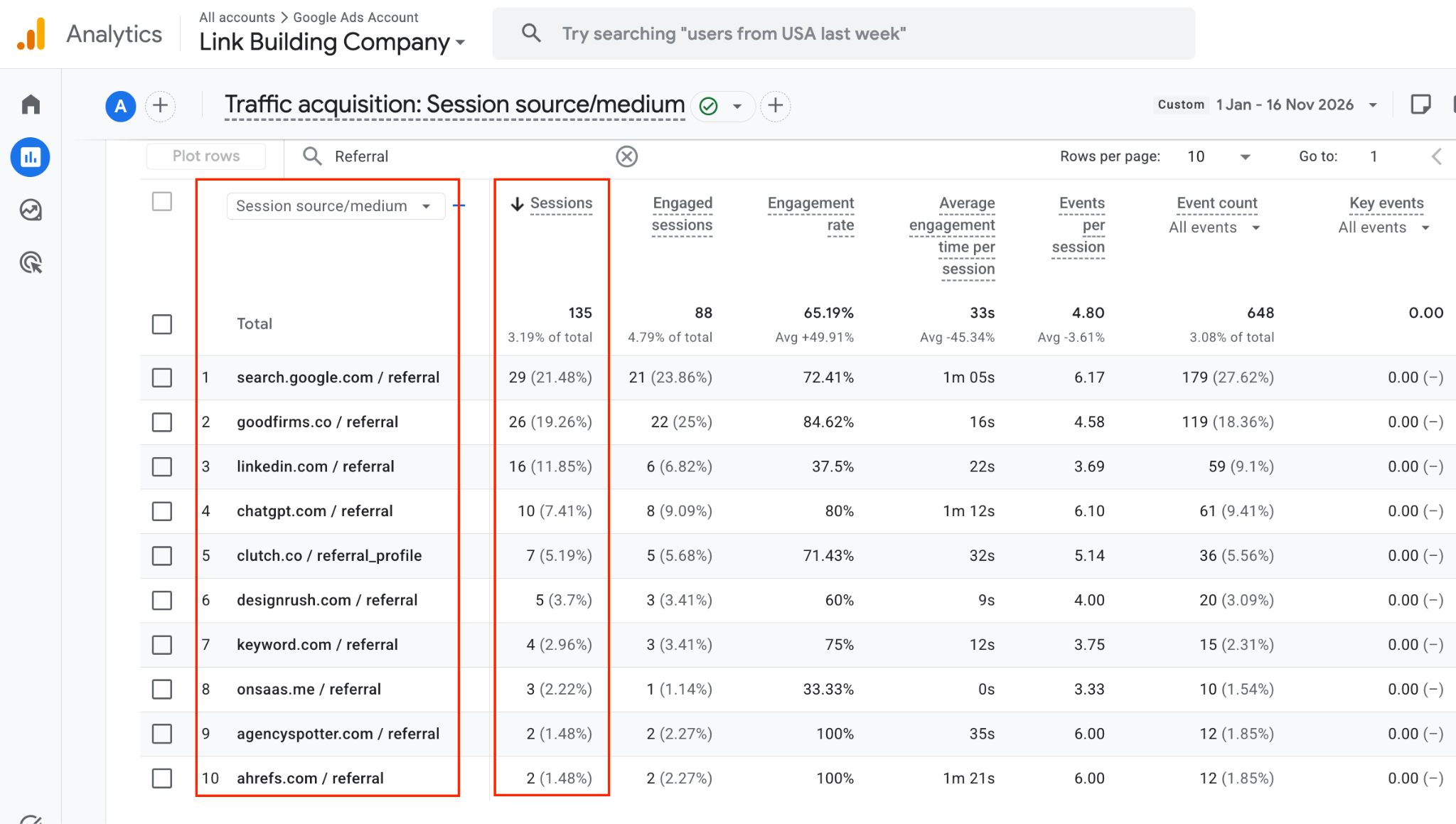
Check referral traffic from each placement in Google Analytics 4. High-quality contextual links from real, trafficked pages often deliver direct referral clicks alongside the SEO value. Connecting referral traffic to conversions links campaign activity directly to revenue.
Anchor Text and Link Quality Trends
Regularly review your anchor text distribution to ensure it stays within a natural range. Flag spikes in exact-match anchors or repetitive patterns that could appear manipulative. Keeping the profile diverse and organic is an ongoing task, not a one-time configuration.
Can You Buy Contextual Backlinks?
Yes, contextual backlinks can be purchased, but we do not recommend or support buying backlinks as a link-building strategy.
A link added mainly because money changed hands can easily become forced, manipulative, or disconnected from the surrounding content.
Cheap backlink packages are especially risky. They often rely on low-quality websites, thin content, excessive outbound linking, or sites created primarily to sell placements. Even when these domains show strong third-party metrics, they may have limited organic traffic or poor editorial standards.
A strong contextual backlink should appear because the destination genuinely adds value to the article, not because someone paid to insert it. Building links this way takes more effort, but it creates a healthier backlink profile and supports more sustainable SEO growth over time.
“Link spam is the practice of creating links to or from a site primarily for the purpose of manipulating search rankings.”
“Any links intended to manipulate a site’s ranking in Google search results may be considered part of a link scheme and a violation of Google’s Webmaster Guidelines.” |
|---|
Build Links That Actually Belong There
What separates a backlink that moves rankings from one that simply exists on a page?
It comes down to context. Knowing how to evaluate placement quality, choose anchor text, build through the right channels, and measure real impact is what turns a backlink profile into a genuine competitive asset.
Contextual backlinks are editorial endorsements from pages that cover topics your audience already reads. Building them well means earning placements where your content genuinely fits, not just where a link can technically be placed.
Link Building Company audits every placement for relevance, traffic, and editorial quality before outreach begins. If you want to outsource link building to a team that treats contextual placement as the starting point, not an afterthought, that's worth exploring.
FAQs
What is a contextual backlink?
A contextual backlink is a hyperlink embedded within the main body of relevant content, surrounded by text that relates to the topic of the linked page. It differs from non-contextual links, which sit in footers, sidebars, or author bios where they carry far less topical signal.
Are contextual backlinks better than regular backlinks?
Yes, in most cases. Links placed within relevant, well-written body content pass stronger relevance and authority signals than links placed in footers, directories, or pages with no topical connection to the destination. The surrounding content gives Google the context it needs to understand why the link exists.
How do I get contextual backlinks?
You can earn contextual backlinks through guest posting on relevant sites, link insertions into existing editorial content, creating linkable assets that attract natural citations, digital PR campaigns, expert contributions to roundups, and building relationships with relevant publishers over time.
Does anchor text matter for contextual backlinks?
Yes. Anchor text should describe the destination page clearly and fit naturally into the surrounding sentence. A healthy anchor profile mixes branded, partial-match, descriptive, and exact-match anchors rather than relying on any single type repeatedly.
How long does it take for contextual backlinks to improve rankings?
Results vary depending on page authority, competition level, and link velocity. Most campaigns show measurable keyword movement within 4 to 12 weeks of quality placements going live. Building links consistently over time produces more stable improvements than short bursts of acquisition followed by inactivity.
Compare packages, then add the one that fits your plan.
3 placements
What’s included
- 1 × Brand Listicles, DR 10 to 29
- 1 × Brand Reviews, DR 30 to 59
- 1 × Brand Mentions, DR 60+
7 placements
What’s included
- 1 × Brand Listicles, DR 10 to 29
- 1 × Brand Mentions, DR 30 to 59
- 1 × Brand Listicles, DR 30 to 59
- 3 × Brand Mentions, DR 60+
- 1 × Brand Listicles, DR 60+
13 placements
What’s included
- 1 × Brand Listicles, DR 10 to 29
- 3 × Brand Listicles, DR 30 to 59
- 1 × Brand Reviews, DR 30 to 59
- 6 × Brand Mentions, DR 60+
- 1 × Brand Listicles, DR 60+
- 1 × Brand Reviews, DR 60+
17 placements
What’s included
- 1 × Brand Listicles, DR 10 to 29
- 4 × Brand Listicles, DR 30 to 59
- 1 × Brand Reviews, DR 30 to 59
- 8 × Brand Mentions, DR 60+
- 2 × Brand Listicles, DR 60+
- 1 × Brand Reviews, DR 60+
Standard delivery: 30 calendar days after payment and complete project details. Review delivery options on the order page.